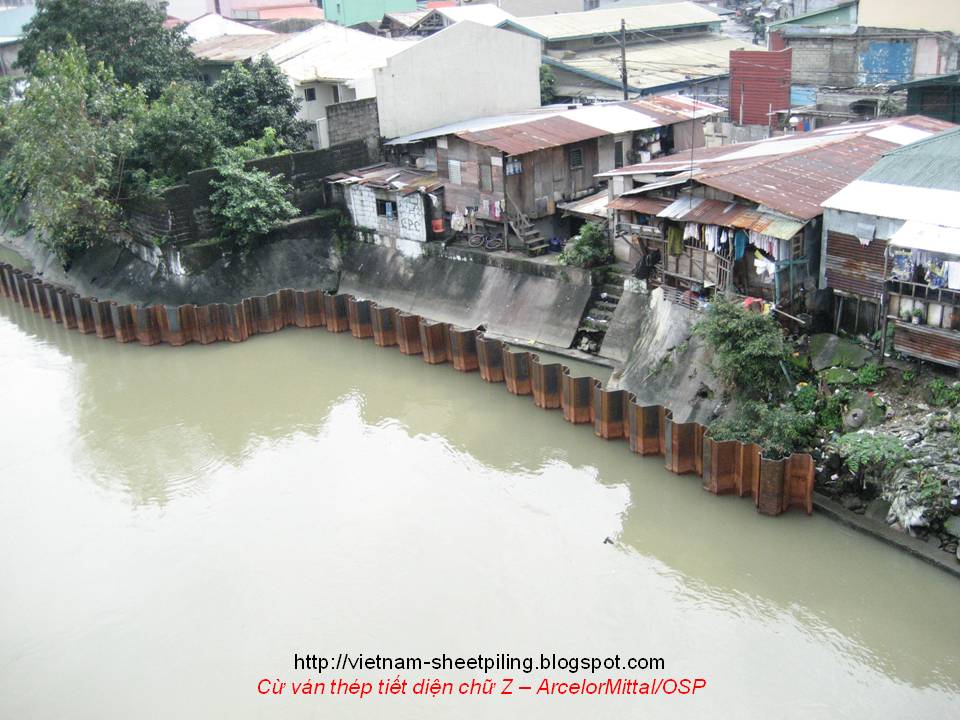
Hiển thị các bài đăng có nhãn cừ chữ Z. Hiển thị tất cả bài đăng

4/05/2014

Third Wave Kiosk built from weathered steel piles by Tony Hobba Architects

Australian studio Tony Hobba Architects sourced weathered steel piles that had previously been used as flood barriers to build this kiosk beside a surfers' beach in Torquay, Australia (+ slideshow).
Third Wave Kiosk built from weathered steel piles by Tony Hobba Architects
Entitled Third Wave Kiosk, the small structure was designed by Tony Hobba Architects to provide changing rooms, toilets, a cafe, and a meeting point for the popular beach, and it is positioned in a prominent spot between the car park and the seafront.
Third Wave Kiosk built from weathered steel piles by Tony Hobba Architects
The self-supporting sheet piles, which are typically used for constructing seawalls and piers, slotted together without any additional fixings to create large corrugated walls around the kiosk.
Third Wave Kiosk built from weathered steel piles by Tony Hobba Architects
"The height and profile of the building has been designed to respond to the prevailing coastline undulations and windswept vegetation, and uses these natural inflections to inform its final folded appearance," say the architects.
Third Wave Kiosk built from weathered steel piles by Tony Hobba Architects
The rusted surface of the metal forms a weather-proof coating around the building that will protect it against erosion.
Third Wave Kiosk built from weathered steel piles by Tony Hobba Architects
"These sheet piles have intentionally been left in their original condition to emphasise the reddish brown and yellow oxides of weathered steel and harmonise with the colour of the surrounding cliffs," added the architects.
Third Wave Kiosk built from weathered steel piles by Tony Hobba Architects
Although intended as a permanent facility, the structure has no fixed footings, so it could be easily dismantled and re-erected in a different location.
Third Wave Kiosk built from weathered steel piles by Tony Hobba Architects
It is accompanied by an outdoor seating area and elevated lookout point, which features retaining walls made from the same sheet metal.
Third Wave Kiosk built from weathered steel piles by Tony Hobba Architects
Photography is by Rory Gardiner.
Here's a project description from Tony Hobba Architects:

Third Wave Kiosk - The Esplanade, Torquay VIC
Central to the design of the Third Wave Kiosk is reverence for its environmental setting; engagement with beach culture; resilience to natural forces and energetic youths; and attention to modest and elegant simplicity.
Third Wave Kiosk built from weathered steel piles by Tony Hobba Architects
The brief was to design a new public facility at Torquay Surf Beach that contained a new kiosk, toilets and change rooms that would be open year round, service an assortment of recreation users and provide an important beachside destination.
Third Wave Kiosk built from weathered steel piles by Tony Hobba Architects
Due to the site's high level of local, regional and international use throughout the year, together with its visual prominence along this section of coastline, the design of the project recognised the need to adequately service community, recreation and tourist requirements whilst sensitively integrating and respecting the local coastal environment and adhering to the Victorian Coastal Strategy.
Third Wave Kiosk built from weathered steel piles by Tony Hobba Architects
The building is positioned adjacent to the nexus of pedestrian circulation, between the main car park and beach access path, to guarantee maximum foot traffic; and is visible from the beach and water's edge as it gently emerges from the primary dune.
Third Wave Kiosk built from weathered steel piles by Tony Hobba Architects
In order to engage beach goers, an elevated lookout and alfresco seating area (65m2) has been provided adjacent to the Kiosk which not only overlooks the beach but doubles as an easily identifiable landmark and meeting point. At only 20m2, the compact kiosk kitchen and servery caters for 1-3 staff depending on seasonal demand. A 25m2 service court out the back caters for additional storage, deliveries and a few empty milk crates keenly commandeered during smoko.
Third Wave Kiosk built from weathered steel piles by Tony Hobba Architects
The height and profile of the building has been designed to respond to the prevailing coastline undulations and windswept vegetation, and uses these natural inflections to inform its final folded appearance. The form therefore takes on a sculptural quality which blends in with the surrounding environment and shrouds the utilitarian function of the working core.
Third Wave Kiosk built from weathered steel piles by Tony Hobba Architects
This is accentuated through its use of coastally identifiable materials and colours by using recycled sheet piles typically used for seawall, bridge and pier construction to be the predominant exoskeleton and expression of the building. These sheet piles have intentionally been left in their original condition to emphasise the reddish brown and yellow oxides of weathered steel and harmonise with the colour of the surrounding cliffs.
Third Wave Kiosk built from weathered steel piles by Tony Hobba Architects
This system of construction proved extremely efficient, both structurally and financially, as the sheet piles were used as permanent retaining walls for the alfresco terrace and lookout; provided permanent formwork for the building slab; and extended up as the primary structure and facade of the building. It appears that this is the first building in Australia to utilise the material in such a way, with the added bonus of reducing the projects embodied energy.
Third Wave Kiosk built from weathered steel piles by Tony Hobba Architects
With sustainability and re-use integral to the outcome, the recycled sheet piles were procured from the 2010/2011 Victorian floods where they were last used for flood protection works along the Murray River to assist in mitigating the devastating water damage experienced by the local river communities during this extreme rain event.
Third Wave Kiosk built from weathered steel piles by Tony Hobba Architects
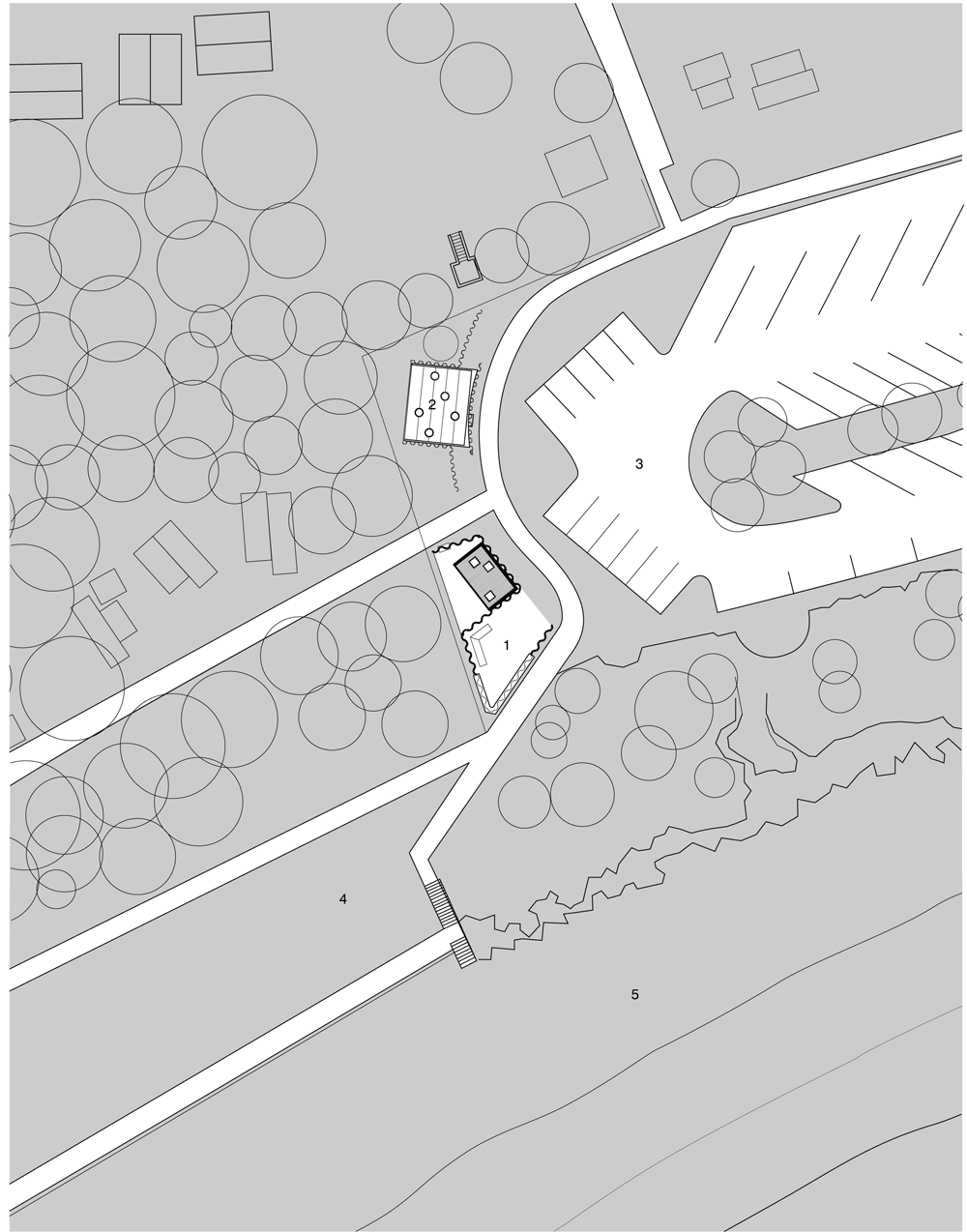
Context plan - click for larger image

Sustainability
Environmentally, the use of sheet piles for the project allowed for a system of construction which was extremely efficient, both structurally and financially, as they are self-supporting components which are linked together with no mechanical fixings and require no permanent footings. This allows the building to touch the ground lightly and be very easily dismantled and or re-erected if required.
Third Wave Kiosk built from weathered steel piles by Tony Hobba Architects
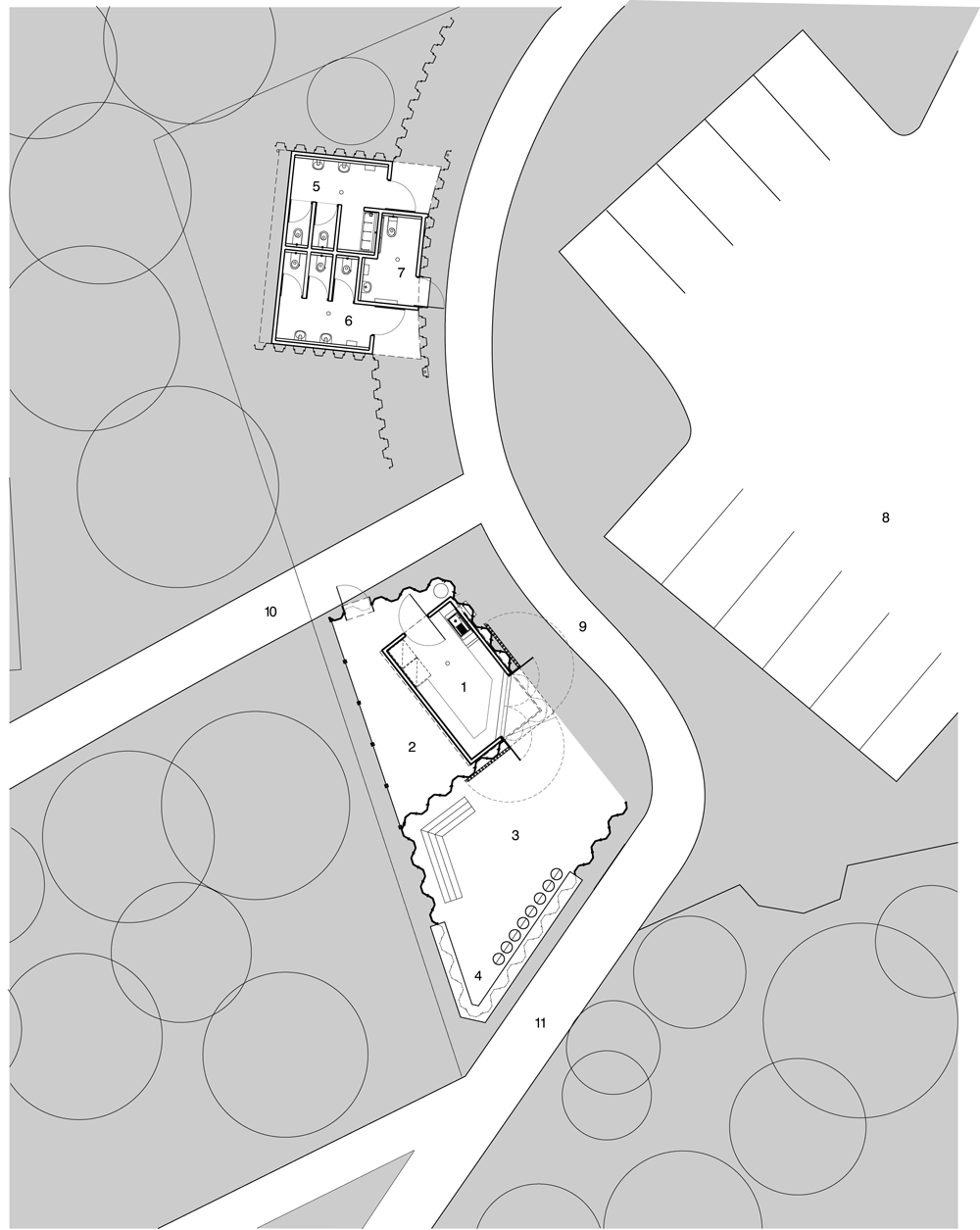
Site plan - click for larger image

The flexibility of the system also enabled the project to utilise the sheet piles as permanent retaining walls for the alfresco terrace and lookout; permanent formwork for the building slab; and as the primary structure and facade of the building; thus eliminating the need for a traditional two component sub-frame and cladding system.
Third Wave Kiosk built from weathered steel piles by Tony Hobba Architects
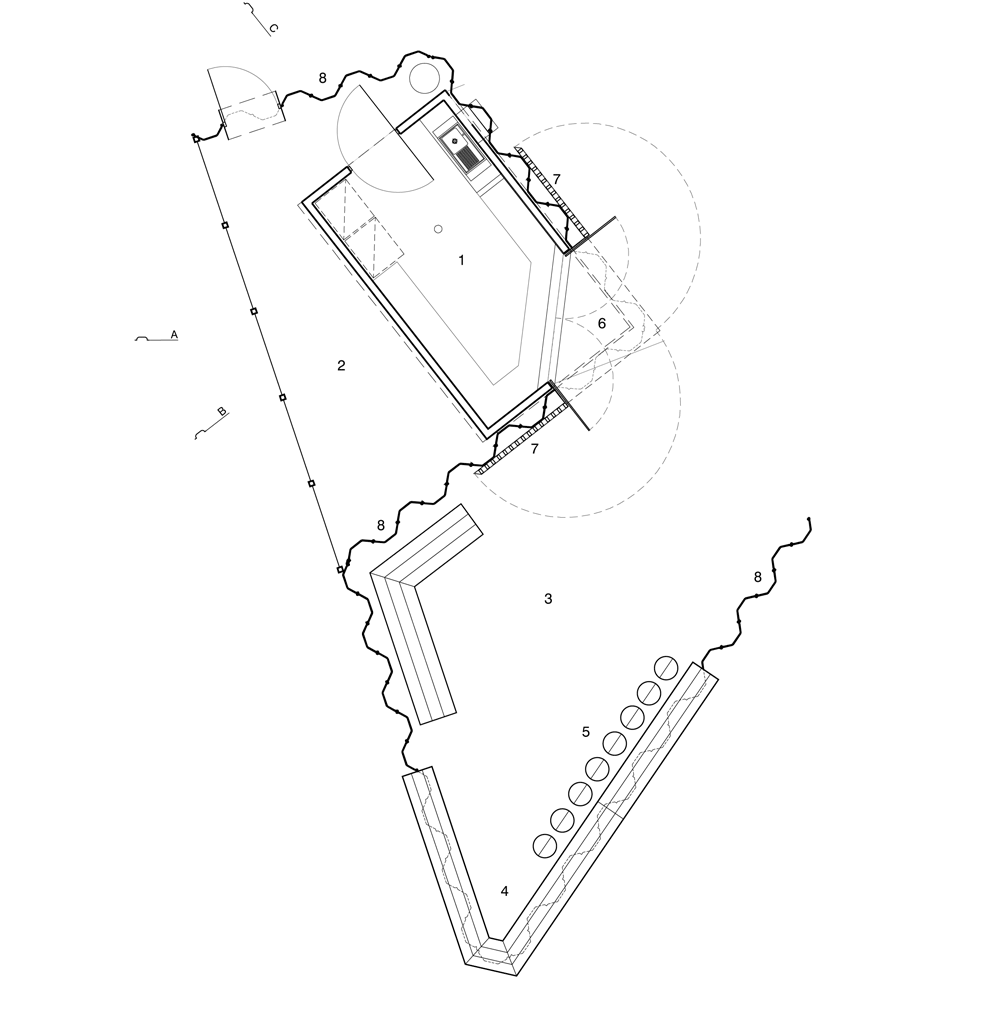
Floor plan - click for larger image

With sustainability and re-use integral to the projects outcome, these recycled sheet piles procured from the 2010/2011 Victorian floods came with the added bonus of reducing the projects embodied energy.

Third Wave Kiosk built from weathered steel piles by Tony Hobba Architects
Section A

Socially, the kiosk provides an important landmark and meeting point for the local community and services the growing number of tourists and recreational users that not only swarm to the coast during summertime, but right throughout the year due to its year round appeal.

Third Wave Kiosk built from weathered steel piles by Tony Hobba Architects
Section B

Economically, the structural efficiency of the sheet pile system allowed for a project with a limited budget to be appropriately and innovatively completed, on time and on budget, and in the manner befitting such a unique location. It also provides employment for 1-3 staff and has a tenancy dedicated to sourcing regional produce in order to reduce its food miles.

Third Wave Kiosk built from weathered steel piles by Tony Hobba Architects
Section C

Consultant Team Details
Architectural Practice: Tony Hobba Architects
Project Team: Michael Lucas, Tony Hobba, Jordan Wright
Client: GORCC (Great Ocean Road Coastal Committee)
Builder: Philip Jessen
Structural Engineer: Harrington Gumienik & Partners
Hydraulic Engineer: Peter Tibballs & Associates
Electrical Engineer: Dick Twentyman & Associates

Source: http://www.dezeen.com/2013/11/17/third-wave-kiosk-steel-piles-tony-hobba-architects/

11/12/2011

SEA - Vietnam Steel Price & Market Updating


SE Asian billet import market quiet, direction unclear

Offer prices for Korean billet to Southeast Asia are prevailing at $620-630/tonne CFR, regional trading sources say. Most offers to Thailand and Philippines are prevailing at $630/t CFR. A Thai trader has heard of Korean 150 billet, albeit an unpopular size, offered at $620/t CFR Thailand.

Taiwanese billet is being offered at around $610/t CFR in the Philippines. “So especial customers are getting offers at $620/t CFR,” a trader in Manila reports. Korean billet at $620/t CFR with its 3% import duty advantage earns that it is $20/t lower cheaper when compared to billets of other origin imported into the Philippines.
The Korean and Taiwanese mills are generally offering their billet on FOB basis at $600-605/t and $595-600/t respectively, regional trading sources tell SBB. Russian billet offers are at $615-620/t CFR in the region, SBB is told. Suppliers are currently giving offers for next month's deliveries.
“It has been quiet this past week. So sellers think that the market is bottoming out and are holding back on offers. At the sales tie, buyers are not anxious to book material,” a regional trader says. Despite offer prices falling by $5-10/t since last week, most regional importers are not interested because they are aiming to book at $600/t CFR. So buyers are even expecting billet prices to fall to $580-590/t CFR.
Offers to Indonesia are at $630-635/t CFR for Korean material. No import deals are reported to have taken place, however. The dollar's recent strengthening against regional currencies has also dented buying interest. "The rupiah is weakening. This is contributing to importers' hesitation to book billet now," an Indonesian re-roller tells SBB.


Vietnamese apparent steel consumption dips 10.

Production of construction long products in Vietnam during October reached 358,000 tonnes, a fall of14.2% fro the previous month and a 19.4% decrease year-on-year, according to Vietnam Steel Association (VSA) data. Sales of longs in October at 327,000t dipped by 14.4% -o- and fell by a significant 27% y-o-y.
Cumulative production of longs during this year’s first ten months reached 4.1t, up 2.4% fro the corresponding period of 2010. Sales rose to 3.97 t, an increase of 1.5% over January-October last year.
“Apparent consumption of finished steel in January-October is estimated to have fallen by 10% year-on-year,” VSA vice-chairman and general secretary Dinh Huy Ta tells SBB. The volume of steel Vietnam imported during January-October dropped by around 1t y-o-y. “The fall in consumption of at steel is sharper than for longs. Exports of steel products rose too,” he adds.
Ta is not optimistic about the Vietnamese steel market this month because the slump in international markets – as well as the uncertain global economic landscape – has caused market players to adopt a
wait-and-see approach„
Policies implemented by the Hanoi government to rein in very high inflation, such as the setting of bank lending interest rates at nearly 20% and other credit-tightening measures, have dampened steel demand.Since inflation was 17.05% during the first ten months and is expected to reach 18% by year-end, these tight monetary and fiscal policies are expected to continue beyond this year.
The VSA tracks data fro its member steel ills that together contribute around 85% of Vietnam's long steel production.

10/30/2011

HRC import prices in SE Asia dip on iron ore price plunge


Import prices of commercial quality 3-12mm thick hot rolled coil have fallen to $630-635/tonne CFR Vietnam. Some deals involving small volumes of SS400B HRC from China were concluded at these level last week, trading sources tell SBB. “There are also some buyers who are waiting for prices to fall to $620/t CFR or even lower to $600/t CFR,” a Vietnamese trader says. Chinese offers for this grade were heard at $640-650/t cfr a week ago. The slide in HRC prices is mainly attributed to the plunge in iron ore spot prices. Some stockists in Vietnam expect Chinese export prices to dip to $585-590/t fob, a local trader says.

Some market sources maintain that these low-priced offers are from speculators or stockists in China since offers from Chinese mills average $645-650/t CFR Vietnam. They say the fall in HRC prices is slowing down and that the market could improve by end-November. "The global economic outlook is better with the agreement to boost the euro-zone's bailout fund," a Vietnamese trader says. And the Chinese domestic market will improve after announced production cuts.

Offers of Korean-origin 2mm base SAE 1006 HRC have dropped to $680-685/t CFR Vietnam compared to $685-690/t CFR a week ago. Some Korean offers are heard at lower levels of $665-670/t CFR
. “Nobody is buying, so they have to lower prices,” a regional trader says. A Taiwanese re-roller is heard, but not confirmed, to have offered SAE 1006 2mm HRC at $670/t CFR Vietnam–

Some 20,000 tonnes of Japanese-origin SAE 1006 2mm HRC for December shipment was sold to two customers at $690/t CFR two weeks ago.


SE Asian billet importers stay away in bearish market


Sentiment for imported billet continues to be weak in Southeast Asia as iron ore and scrap spot price plummet across the region. A booking of CIS Black Sea billet is heard booked last week at $630/t CFR Thailand. In Philippines, Russian-origin billet was offered at $630/t CFR Philippines and for Korean-origin billet at $640-645/t CFR, which is $5-10/t lower than a week ago.

Traders are generally believed to be making these low-priced offers. “Billet makers in Korea are stepping back and not making fresh offers,” a Korean trader tells SBB.

Vietnamese induction furnace mills are looking to export billet today at $620-630/t fob, local traders tell SBB. “The billet producers are using high-priced scrap so they face difficulties in lowering export prices,” trader in Ho Chi Minh City tells SBB. "Production costs are not competitive," another says. ""I don't think that there are any deals," he adds. An offer of induction furnace billet from Vietnam is heard at $645/t CFR Thailand. Freight within the region is estimated at $20-25/t.

Buying interest is very weak because of fears of offer prices falling further. Regional rebar markets are sluggish. As long as scrap prices continue to tumble, the billet import market in the region will continue to be under pressure, SBB is told.


Vina Kyoei gets approval for new billet plant, bar mill


The Vietnamese government has approved plans by Vina Kyoei Steel to build a meltshop, billet caster and rolling facilities to nearly double the mill’s capacity to about 900,000 tonnes/year when the expansion is completed around 2013.

The new meltshop will host a 90-tonne AC furnace and a billet caster capable of producing 130-150mmsquare billets to 6 metre lengths, and a 500,000 t/y rolling mill. Located at Vung Tau in southern Vietnam,the mill is currently operating at full capacity at 400,000 t/y producing rebars and wire rods from imported and domestically-sourced billets.

Vina Kyoei is owned 45% by Japanese mini-mill Kyoei Steel, 40% by Vietnam Steel Corp, and 9% and 6% respectively by Japanese traders Mitsui and Marubeni-Itochu Steel.

“We have been planning a meltshop at Vina Kyoei to supply billet ourselves to improve competitiveness,”Kyoei spokesman tells SBB. To date, Kyoei has been supplying about 5,000-6,000 t/m of billet from its Osaka plant to Vina Kyoei. “Exports to Vina Kyoei will decrease but we have customers in Southeast Asia and also in Japan, so we will have no problem with losing Vina Kyoei as a billet consumer,” he said.

Vina Kyoei has also been importing billet from other sources and procuring domestically-produced lower priced semis.

With the new facilities Vina Kyoei will start producing angles too, though the company has not decided production volume. Last month it began producing screw bars with technologies transferred from Kyoei.


Source: SBB

10/18/2011

SE Asian HRC import prices slide in bearish market


The rapid decline in hot rolled coil offer prices in Southeast Asia has caught regional market players offering 3-12mm SS400B HRC at $675-680/tonne CFR Vietnam compared to $690-695/t cfr early last week.

Certain low-priced offers of Chinese-origin 3-12mm thick SS400B HRC are at $665-670/t cfr Ho Chi Minh local stockists tell SBB.“The low-priced offers are due to pre-selling by traders and stockists" a Chinese trader says. Likewise, some traders are offering 2mm base SAE 1006 HRC from Korea and Taiwan at around $705/t CFR Vietnam, down $10/t from last week.

Despite the lower prices, buying is very thin – chiefly because of the general market perception that prices could dip by a further $20-25/t before stabilising.

Some pessimistic market gossip in Vietnam suggests that Chinese HRC prices could fall as low as $630 cfr before recovering. But a Vietnamese trader dismisses this: "the Chinese mills will not allow HRC price to fall so far because they will lose money. They will cut output before this happens.

“There are some brave and bold buyers,” a Singapore-based regional trader tells SBB. “They think that since prices have fallen steeply, prices will also jump steeply and are buying on this basis.” However,traders say that the main problem they face now is getting importers to give bids.

The weakening of regional currencies against the dollar last month sparked the recent downturn in HRC prices, combined with softening iron ore and coking coal spot prices. "Demand has been thin for a longtime and mills now realise that they need to lower prices if they want to move their products,” says trader.

8/01/2011

Các loại tiết diện Cọc Ván Thép

Cọc ván thép được sử dụng đầu tiên từ những năm đầu của thế kỷ XX, các tấm Cọc ván thép đã phát triển thành một trong những vật liệu linh hoạt nhất trong kho vật liệu kỹ thuật xây dựng dân dụng. Với kỹ thuật sản xuất thép hiện đại và cải tiến của công nghệ hiện đại, Cọc ván thép được chế tạo với nhiều tính năng mạnh mẽ vượt trội, nhẹ hơn và linh hoạt hơn trong thi công.

Sản xuất cán nóng cọc ván thép
Các cải thiện đã diễn ra không chỉ trong quá trình sản xuất cọc ván thép mà còn trong các kỹ thuật lắp đặt - thi công. Trong bài này chúng tôi sẽ giới thiệu đến các chủng loại khác nhau của cọc ván thép tấm hay là các tiết diện của cọc như thường được gọi. Chúng tôi sẽ đề cập chi tiết về thi công trong một bài đăng sớm nhất.

Ngày nay cọc ván thép phát triển thành các tiết diện hình học khác nhau. Bắt đầu từ tiết diện cọc tấm chữ U là loại cừ ván thép phổ biến nhất, hiện nay còn có tiết diện hình chữ Z, cọc tiết diện phẳng hoặc kiểu Omega. Cọc phẳng hay straight web được sử dụng để hình thành các giếng kín (cofferdams)cỡ lớn.Linh động được sử dụng trong nhiều dự án quy mô lớn trong các công trình kỹ thuật dân dụng.

Bất kể các loại cọc ván thép nào, vẫn chủ yếu là được sản xuất với công nghệ cán nóng và có một số chủng loại được cán nguội. Sự khác biệt là quá trình sản xuất cán nguôi diễn ra ở nhiệt độ phòng, với vật liệu thép chạy qua hệ thống các trục với con lăn định hình, trong khi thép hình cán nóng được hình thành ở nhiệt độ cao. Từ công nghệ tạo hình nguội thép tạo ra các chủng loại cừ thép mỏng hơn rất nhiều so với thép cán nóng.

Cán nguội (cold rolling) cọc ván thép
Như có thể thấy trong bản vẽ kèm theo, kích thước của cọc ván thép được định dạng theo các thông số b, h, e. Trừ những cọc ván dạng tấm phẳng. Các thông số này đại diện cho bản rộng của tiết diện, Chiều cao của tiết diện, và độ dày mỏng bản bụng và bản cánh. Với cọc dạng tấm phẳng, chiều rộng được ký hiệu là L và W. chiều cao hay độ dày được ký hiệu là e. Các loại kích thước rộng bản, dày mỏng khác nhau tạo nên các loại cọc ván thép có khả năng chịu áp lực, tải trọng khác nhau.

Nếu bạn chú ý vào chiều dày tiết diện, ví dụ cọc van tiết diện chữ U, bạn sẽ thấy rằng độ dày bản bụng là dày hơn so với chiều dầy bản cánh. Bản cánh được thiết kế mỏng hơn do sự làm việc của bản cánh là thứ yếu trong kết cấu cọc và giúp cọ nhẹ hơn cũng như dễ dàng trong thi công. Thiết kế đã tính toán trước độ dày tối ưu của bản cánh và bản bụng trước khi các cọc ván được sản xuất theo một quy cách nhất định. Cả hai độ dày ảnh hưởng đến khả năng chịu lực - kháng uốn của các tấm cọc. Một lần nữa, nếu bạn nghiên cứu các loại tiết diện cọc ván thép, khả năng chịu lực được kỹ thuật hóa bằng các con số đại diện cho "Mô men Quán tính - Moment of Inertia " và "Mô đun tiết diện - Section Modulus".


Cọc ván thép tiết diện chữ U

Cọc ván thép tiết diện chữ U, với độ sâu và chiều rộng cũng như độ dày tiết diện. Chiều sâu tiết diện (hay chiều cao của cả tường cừ) sẽ gấp hai lần một cọc đơn khi được cài đặt vào nhau.


Cọc ván thép tiết diện chữ Z
Cọc ván thép tiết diện chữ Z, với độ sâu và chiều rộng cũng như độ dày tiết diện có thể giống hoặc khác nhau. Chiều sâu tiết diện (hay chiều cao của cả tường cừ) không thay đổi so với một cọc đơn khi được cài đặt vào nhau. Sau khi cài đặt hai cây cọc đơn, ta có một cọc tiết diện tổng thể như cọc chữ U.


Cọc ván thép tiết diện phẳng - Straight web
Cọc dạng tấm phẳng có chiều sâu nông, chủ yếu là khả năng kết hợp và chịu lực kéo cao giữa các tiết diện dơn. Về cơ bản một tấm cọc dạng phẳng bằng thép với các tính năng lồng vào nhau ở cả hai bên, tạo nên các tổ hợp chịu lực lớn là tường chắn không trọng lực cho các khu nước sâu hay địa chất rất yếu.


Cọc ván thép tiết diện Ω (Omega)

Với cọc tiết diện Ω, chúng có khả năng kết hợp và khả nặng hạ cọc sát vào tường của các địa hình thi công hiện hữu bị hạn chế. Các cọc Omega có lợi thế trong lượng nhẹ cho các kết cấu vĩnh cữu với chi phí hợp lý.

6/12/2011

Sổ Tay Toàn Diện Nhất Về Thiết Kế Và Thi Công Cừ Thép

Cuốn cẩm nang về thiết kế và thi công cũng như các vấn đề liên quan khác về cọc ván thép của hãng sản xuất thép và cung cấp cọc ván thép lớn nhất thế giới hiện nay, có mặt trên hơn 60 Quốc gia trên thế giới - Tập đoàn ArcelorMittal. Ấn bản chỉnh sửa bổ sung lần thứ 8 năm 2008.

Các thông tin trong cuốn Sổ tay này nhằm giúp các kỹ sư thiết kế với công việc tính toán kiểm tra hàng ngày và các công tác thi công liên quan đến tường chắn đất cừ ván thép. Đây là một cuốn sách tham khảo cho các kỹ sư với yêu cầu đã có ít nhiều kinh nghiệm trong thiết kế thi công cọc ván thép.

Ấn bản lần thứ tám của Sổ tay bao gồm đáng kể các thông tin được cập nhật, đặc biệt trong các lĩnh vực như phụ gia chống thấm, chống ồn và rung động cũng như thi công.

Cuốn sổ tay này phản ánh sự năng động, thay đổi không ngừng của lĩnh vực kết cấu nền móng, và là bằng chứng về cam kết của Hãng ArcelorMittal là luôn hỗ trợ khách hàng kịp thời và linh động.
Ấn bản năm 2008 còn cập nhật tất cả các tiết diện mới sáng chế từ đầu Quý 2 năm 2008.

Nội dung cuốn Sổ tay Piling Handbook - Về các vấn đề về thiết kế, tính toán và thi công cọc ván thép các bạn có thể tải về cuốn cẩm nang liên quan các vấn đề về cừ thép - Piling handbook bản tiếng Anh file PDF 3.94MB dày khoảng 500 trang với 13 chương:

Xin copy link: http://www.arcelormittal.com/sheetpiling/uploads/files/ArcelorMittal%20Piling%20Handbook_rev08.pdf


Tóm tắt nội dung như sau:

Chương 1: Thông tin tổng hợp về cọc ván thép
Chương 2: Chống thấm và phụ gia trong thi công
Chương 3: Tính toán chống ăn mòn và tuổi thọ cừ
Chương 4: Áp lực đất & nước trong thi công cừ thép
Chương 5: Tính toán thiết kế kết cấu cọc ván thép
Chương 6: Các loại tường chắn bằng cọc ván thép
Chương 7: Các loại giếng kín / đê quay
Chương 8: Các biểu đồ tường cừ thép
Chương 9: Thi công đê quay / tường chắn trong lực (circular cell)
Chương 10: Các loại cừ và phụ kiện chịu lực
Chương 11: Các vấn đề về thi công
Chương 12: Giảm chấn và chống ồn trong thi công
Chương 13: Các thông tin hữu dụng khác